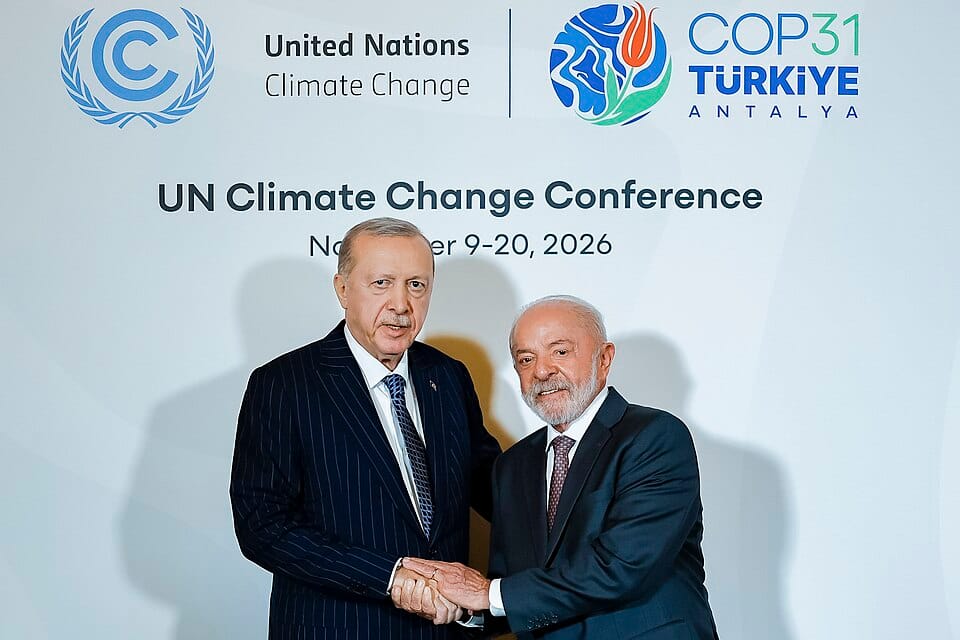
The latest summit of world leaders and scientists on climate change, COP31, held in Turkey, recently collapsed without any clear plan of action on its central issue. This was mostly because fossil fuel producing nations such as China, India, and Russia blocked the explicit addressment of fossil fuel's role in the climate crisis and the need to phase it out. These nations are also blocking the completion of the Intergovernmental Panel on Climate Change's (IPPC) next regular report on climate change which is instrumental to the setting of the policy agenda on climate change by world governments, for broadly the same reasons. Their blocking of the IPCC report is justified by them on the grounds that a recent UN report claiming that it will be impossible to halt warming beyond 1.5 degrees Celsius hasn't been sufficiently vetted by the scientific process, even though the report was authored and reviewed by experts.
These nations are claiming that centering the issue around the phasing out of fossil fuels excludes global south nations from the climate discussion, but their stalling and calling into question of reliable scientific data is doing more to hurt the most venerable nations in the global south than anything, given that these nations urgently need aid for adaptation to climate change which they will only get via the publication of the relevant science and the concluding of relevant international agreements on the basis of that science. Decisive climate action is important right now especially given that we are on track for an el-nino season which will be more intense than average endangering people around the world via the collapse of supply chains and food production, the spread of disease, and underprepared infrastructure which are already being exacerbated by global conflicts.
Cop31 is a microcosm of a general phenomena in world climate politics where, ever since the scientific discovery of man made climate change, the science becomes more and more clear, while a deluge of world meetings designed to address the issue routinely fails to stop humanity from hurtling toward disaster. The obvious truth that policy makers don't want to admit is that the capitalist world-system is not fit to address the climate emergency. The emergency itself is borne of the technological infrastructure of capitalist society. This infrastructure has made world-wide production dependent on the burning of fossil fuels that release greenhouse gases (GHGs) into the atmosphere which produce small rises in temperature that never the less lead to catastrophic climate shifts that endanger sentient life on planet earth.
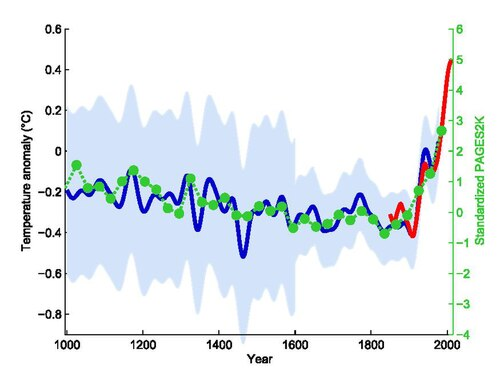
The danger comes not just from increases in natural disasters involving extreme whether events like tornados and hurricanes, but also increased extreme heat and danger of flooding. The famous 'hockey stick graph' shows the spike in global temperatures correlated to the development of the world-economy from the industrial revolution on. Despite everyone understanding the risk, excepting those who fall for fossil fuel company financed climate denial, including policy makers, the world-economy's dependence on fossil fuels continues because world governments are in the pockets of fossil fuel industries. Climate scientists know that the needed transition to renewable energy such as solar and wind power can be done, it can be done right now.
The problem is that doing so would cut into the bottom line of the same governments who need to take action. Economists debate whether the switch would actually be a drag on economic performance ultimately, but the fact is that the capitalist world-economy is right now driven by fossil fuels, so the gamble is one the governments and business will continue to be reticent to take. The point of capitalist production is not to develop technological infrastructure that meets humanity's needs in a sustainable way. Rather its driven my the mere imperative to sell commodities for more than it costs to produce them.
Issues of environmental sustainability are mere externalities as economists refer to them. They are not issues which the market itself forces entrepreneurs (capitalists) to pay for. Rather their costs are borne by society at large; mostly through taxation as well environmental regulations. The ratcheting up of this taxation and regulation over time becomes a growing cost of production for capitalists so they seek to mitigate it by resisting climate policy that endangers their bottom line and governments are often far too eager to concede given that they are dependent on the activity of the capitalists for a functioning, never mind growing national economy.
Experts are now beginning to question how well the climate summit model is working, given that it seems to be not working at all. However, there is nothing bourgeois governments can do to overcome what Marx called the metabolic rift between humanity and nature in capitalist society. Also recognized in different terms by Anarchist Communist Peter Kropotkin, the metabolic rift consists in the fact that capitalist production treats the environment not as an extension of the interests of human and sentient life, but a mere reservoir of profits. Human beings are thus disconnected from the natural world by modern industrial society, divested of the ability to engineer their activity in nature in a way that continously meets human needs over the long haul.
The main lesson of COP31 is therefore that the movement for climate justice must stop relying on politicians and business to strike some sort of political compromise that transitions us to a 'green', or 'low growth' economy. Rather there must be a social revolution that replaces capitalism with a new mode of production in which the scientific techniques of production are applied to the sustainable proliferation of social wealth for current and future generations. This is even more urgent as the issue becomes less one of preventing catastrophic outcomes (which it remains in large part) and more one of adaptation.
The fact that humanity will now inevitably bare the brunt of over 1.5 degrees of warming means that we will have to find a way to adapt to the changing climate no matter what happens. This can happen in one of two ways. Structures of coercive subordination and class domination can persist in human society which means those structures would move away from capitalism and toward a new mode of production which retains class oppression, while prioritizing moment to moment adaptability in a changing climate over capital accumulation. Thus human society would become a sort of electron cloud of various connections and social structures coming into and going out of existence according to the imperatives of ecological survival with class oppression and political authority deployed to enforce conformity to these imperatives.
The alternative is a world socialist-confederation in which worker control of society brings about a classless human community which voluntarily cooperates on a global scale to meet the needs of all. In this new world-system free and equal associations of producers apply the general intellect (to use Marx's phrase) of scientific knowledge to produce bountiful social wealth that not only secures humanity's survival in a changing climate, but also the all around cultural development of the community and personal development of individuals. The only third option is the extinction of humanity, or as Marx put it 'depopulation of the earth'. The choices before us are thus a new adaptationist form of oppression, a sustainable communist cornucopia of goods, or annihilation. To borrow Luxemburg's formulation; socialism, or barbarism.
Sources
Climate Change: A Very Short Introduction, Maslin
Sociology: The Basics, Plummer
Economics: The Basics, Cleaver
https://theconversation.com/cop31-collapse-countries-reject-deal-without-mention-of-transition-away-from-fossil-fuels-297269
https://theconversation.com/why-fossil-fuel-producing-countries-are-stalling-this-crucial-climate-report-296997
https://www.youtube.com/watch?v=buN84f3elMg
https://www.youtube.com/watch?v=BYsC7fIfE2o&list=PL3wxiH0o_6WRno6Mow86qearAO6dmJWHa&index=15&t=3s
The Concept of Nature in Marx, Alfred Schmidt
Marx's Ethical Vision, Wills
Peter Kropotkin and Communist Anarchism, Kinna
World-Systems Analysis: An introduction, Wallerstein
Historical Capitalism and Capitalist Civilization, Wallerstein
https://redandblackanarchists.com.au/n-e-o-w/
This is a companion discussion topic for the original entry at https://redandblackanarchists.com.au/what-the-failure-of-cop31-says-about-capitalism-and-climate/