In a previous article I addressed one of the most common reasons for belief in God and thereby one of the most common arguments for God's existence, the notion of the unmoved mover, or first cause. Specifically I argued that even if there is a first cause of some kind, it would have to be identical to some state of the natural world, rather than a supernatural abstraction away from nature. In this article I will address another commonly supposed consideration for God's existence; design. Arguments from some kind of first cause are usually called cosmological arguments, whereas as arguments from design in the world are called teleological, where teleology refers to the purpose, or intent something was created for, or moves toward.
Like the cosmological class of arguments there are many arguments from design. Before the development of scientific cosmology, modern earth sciences, and the scientific theory of evolution most naturalists in the west (early scientists) subscribed to a kind of design argument meant to explain the origin and diversity of life. Noticing that all successful life forms were well adapted to their environments they argued, under the influence of theologian William Paley, that God was the one who specially created each organism, along with the environment it fit so well, to be roughly as they are now. Paley in his work on natural theology, which was taught at universities in the west up to the time of Darwin, developed a general framework for inferring God's design.
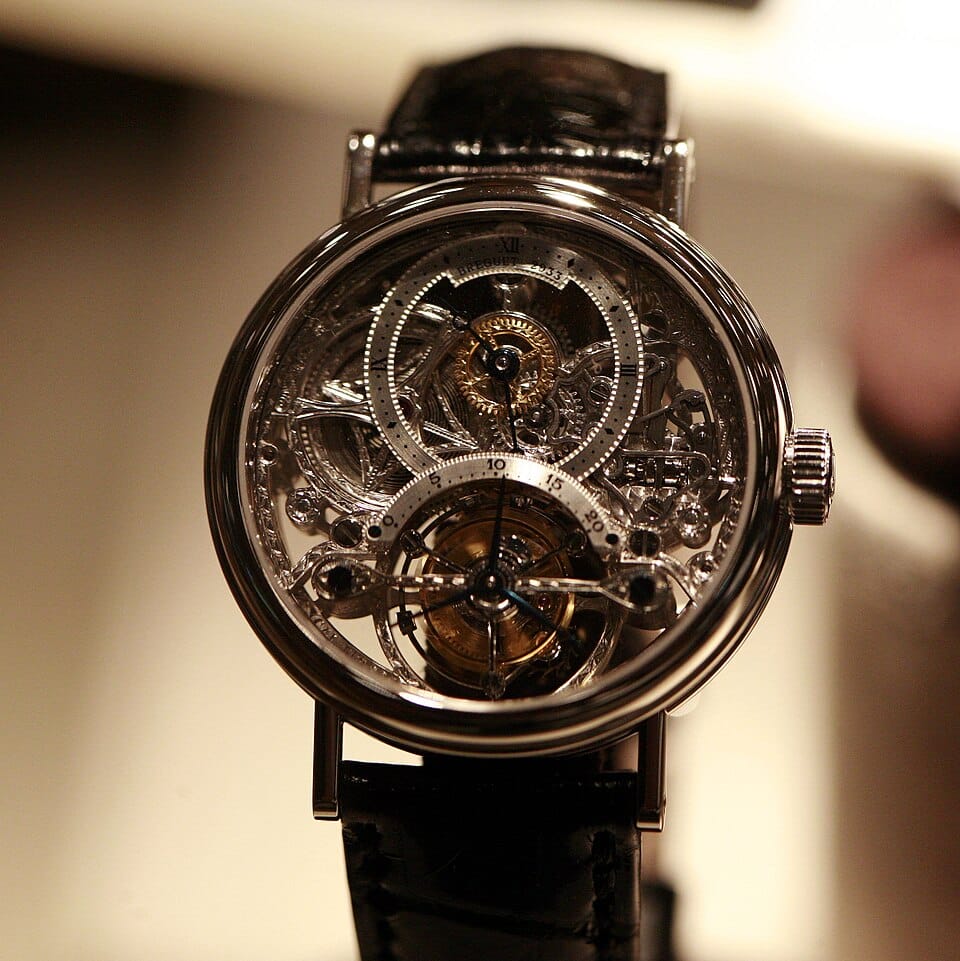
According to Paley the existence of many parts that work together in a complex way to perform a function licenses one to infer design. He motivated this principle by pointing out that if you stumbled across a watch on the beach you wouldn't, and shouldn't conclude that it is naturally occurring. Rather, you would and should conclude it was designed by human being. Paley intimated that this is because the watch is a series of parts that come together to form a complex function.
He then argued that clearly nature, with its regular environment in which many different complex organisms are well adapted, constitutes such a series of parts coming together in a complex function. Therefore, just as you infer design in the watch by human beings, you should infer cosmic design by God. In the post-Paley period a titanic German philosopher by the name of Georg Wilhelm Friedrich Hegel reworked classical philosophical arguments in favor of God's existence in what has been called his recasting of the theological proofs. Hegel recast the proofs by transforming the structure of the inferences so that they concluded with philosophical recognition of the unified totality of nature and human culture, rather than the existence of a supernatural agency.
He recasts the teleological proof by pointing out that the appearance of design in nature is produced by the way its regularities unify its many segments and parts into a totality that ends up producing purposeful existence for organisms that reproduce themselves, not by the fact that these parts were actually designed to work together. He argues this on the basis of his method of vitiating dualistic concepts of the world which multiply entities beyond what the empirical data justifies, pointing out that the simpler and more unified explanation for empirical data about nature is to appeal to the regular structure of nature itself. Hegel did not believe in natural selection as a pre-Darwinian thinker who thought all organisms were always biologically at home in their environment; an idea inconsistent with a long path of evolutionary development. However, Darwin and Wallace's 19th century discovery of evolutionary principles in biology in a way put more paid to Hegel's recasting of the teleological argument than Hegel could have himself via metaphysical polemic.
What Darwin, Wallace, and generations of subsequent earth and life scientists showed was that organisms and their environment were not separately created for each other as they are now. Rather they formed over millions and ultimately billions of years driven by chemical and geologic processes of change on and within the earth and then ultimately by a filtering effect of the environment on heritable changes in organism populations. The discovery of genetic mechanisms for the random production of heritable mutations further illuminated this process and strengthened the evolutionary explanation of biological diversity. Even though Hegel's static conception of nature had been vitiated by these developments his notion that the simplest, most unified, and most independently motivated way of explaining the appearance of design in nature was through the regular processes of the natural totality itself was vindicated making evolutionary biology a touchstone of atheistic polemic in philosophy.
As such there was an almost immediate backlash from religious thought against evolutionary biology, despite the fact that Darwin himself was careful to argue in the first edition of his book that the process of evolution was set in motion by a divine intelligence. Mainstream religion however never succeeded in undermining evolutionary biology. The only real challenge to it from the religious side these days is the clearly pseudo-scientific creationist/intelligent design movement which makes its arguments simply by pushing scientifically discredited, or falsified ideas such as irreducible complexity (the idea that some biological mechanisms are two dependent on their existing forms to have evolved), specified complexity (the idea that complex patterns can only arise from actual design), and denials of the ages of the earth, life, and the universe in order to validate a literal reading of the biblical timeline of creation.
Their lack of scientific credentials forces creationists and ID proponents to publish in their own non-peer reviewed publications and to constantly lobby in US courts for equal time in school curricula utilizing culture war tactics that appeal not to scientific accuracy, but the desire on the part of religious communities to have their children inculcated with religious ideas in school. So far such attempts have been essentially all shut down on the basis of the constitutionally protected separation of Church and State. Biology is thereby another chapter in the philosophical death of God where the intellectual basis of theism is eroded in favor of a mechanistic, immanent, and impersonal picture of nature. It will take a serious blow to the impartiality of scientific practice for any sort of Paleyian orthodoxy to return in the earth and life sciences.
This doesn't mean that the teleological argument is down for the count. The existence of scientifically supported naturalistic explanations for the tree of life and the structure of the cosmos has meant that theistic philosophers of religion, unless they are inclined toward ID style pseudoscience, no longer rely on Paley style inferences from apparent design to God. However, they have managed to come up with two new versions of the teleological argument which are more scientifically informed and philosophically sophisticated. These are the argument from fine-tuning (from here referred to as FTA) and the argument from pyscho-physical harmony (from here referred to as PPH). They run as follows:
FTA
Fine-Tuning in physics refers to the question of why certain physical parameters take the precise values that they do. These include the gravitational constant, the mass of the higgs field, the relative strengths of the strong and weak nuclear force, etc. At least some of these values are probably balanced just right for the existence of the kind of orderly life supporting universe we have. Despite this, physicists currently lack a scientifically supported explanation for these values.
Its possible that these values are simply a matter of luck; we just happened to have the right ones. However, if they can be explained, physicists understandably want to find that explanation since the whole point of physics and scientific cosmology is to deliver scientific answers to questions about features of the universe. Here theistic philosophers have come in to offer a theological explanation for cosmic fine-tuning. God would obviously have the ability to build fine-tuning into the universe and a natural thought is that given that he would want to create life he would in fact do so. Thus theology supposedly solves the fine-tuning problem.
PPH
Psycho-physical harmony is a concept in philosophy of mind that refers to the way in which our reasons for action and values line up with our experiences. For instance, drinking water on a hot summer day feels refreshing, so a good feeling accompanies the actions like hydration which we have reason to perform. Its true that not everything works like this. We have reason to go into child labor from time to time to renew our population, but that is not a pleasurable process whatsoever, for instance. Yet, things could conceivably have been much worse.
It could have been that nothing we had reason to do was particularly pleasurable, or that many more things we have reason to do were painful. Hydrating on a hot summer day could have been accompanied by a burning, rather than refreshing sensation, or a sound of static, rather than any particular sensation at all. You might think that this is all explained by evolutionary biology. After all, clearly pleasurable sensations accompanying healthy actions confers a survival advantage, so that we don't die of dehydration for instance. This intuitive explanation, however, isn't actually an explanation of the relevant harmony, its simply a repetition of it. To say that evolution worked through a harmonious match between certain experiences and certain values/reasons for action is to simply restate the data we are supposed to explain. Why should there have been any such harmony for evolution to work through in the first place when it conceivably could have worked through a more disharmonious psycho-physical set up?
Evolution could have wired us, for instance, such that our neurology pushed us to seek out painful, or neutral experiences, rather than pleasurable ones. Thus we would still seek out the experiences we had reason to, even if they weren't psycho-physically harmonious. In a recent paper philosophers Cutter and Crummett argue that God, or at least some cosmic value selection process is a good explanation for harmony. If the universe for some reason moved in the direction of harmony, then it would no longer be a mystery that it obtained. We can get this result if we suppose either that a good God who thereby desired a harmonious creation exists to set up the relevant psycho-physical regularities, or at the very least that the universe tends toward things of value, which most contemporary atheists would probably find just as suspicious as the theological explanation.
Internal Force/God of The Gaps
While these arguments sound robust at first blush, they are actually built on a very spurious form of reasoning. This is the type of reasoning where we find a seemingly unlikely outcome, or something seemingly inexplicable, simply construct a hypothesis that if true would account for the data, then take the hypothesis as being true in virtue of this construction. That might sound perfectly reasonable at first, but its actually not. We can essentially get any conclusion we like via this kind of reasoning. In the FTA case cosmologists have also floated a multiverse hypothesis on which the values of the constants are the result of the fact that this universe is only one of an array of universes with different values. Both theism and the multiverse account for the fine-tuning data.
Sometimes apologists will try to demolish the multiverse by saying either that there's no independent evidence for the multiverse, or that the multiverse itself, having the right number of universes such that at least one has the right fine-tuned constants, just pushes the fine-tuning issue up to the level of the multiverse. The second argument is just missing the point of the fine-tuning data. The problem of fine-tuning is not that there is a universe at all to have fine-tuned constants, but to provide an explanation for the constants themselves. The multiverse does this so it doesn't push back the fine-tuning problem anymore than theism does. The issue of independent evidence is actually a problem with the theistic approach in the first place.
Despite the fact that the multiverse accounts for fine-tuning the scientific community has not adopted it as the explanation for fine-tuning. This is because what separates scientific reasoning for mere philosophical speculation is that explanations need to be supported by independent lines of evidence. We don't just come up with a hypothesis that explains data and leave it at that. We have to test the hypothesis to see if it is on the right track, or we need to go back to the drawing board. This is the much vaunted importance of falsification in the scientific worldview.
If we are content merely to construct hypotheses, rather than test them, then there's nothing to tell us whether the multiverse explanation, theism, or something else we have yet to think of is the right explanation for fine-tuning. Similarly we wouldn't have been able to adjudicate between evolutionary biology and special creation as explanations for the diversity of life. The same goes for PPH. Why should we accept either theism, or a value selecting universe merely on the basis that we can construct such an explanation to account for psycho-physical harmony if neither can be further tested against independent considerations?
Hegel called this kind of adhoc explanation mongering 'the internal force'. By this he meant the stage of consciousness in which human observers are content simply to construct intuitive explanations for worldly phenomena, rather than try to develop a unified theory that accounts for everything using the same group of simple principles. With particular regard to science Scottish protestant theologian Henry Drummond referred to this kind of theology as 'God of the gaps' where we find something scientifically unexplained and simply plug the whole with God. This hopelessly speculative, often pseudoscientific form of reasoning is clearly not good support for any substantive philosophical conclusions such as the existence of God.
If these kinds of explanations are the only options on the table to account for fine-tuning and psycho-physical harmony, then we might as well say that they are products of chance, having no explanation at all other than blind luck. Thus philosophical theology has failed to arrest the death of God via teleological arguments. The trend from Hegel on has been the continuing replacement of theological explanations with mechanistic and naturalistic ones. As Kropotkin put it in his Modern Science and Anarchism the scientific worldview proceeds without having to reference theology at any point, such that to do so would, in Marx's terms, be to abstract away from empirical reality. To quote Emma Goldman:
Already there are indications that theism, which is the theory of speculation, is being replaced by Atheism, the science of demonstration; the one hangs in the metaphysical clouds of the Beyond, while the other has its roots firmly in the soil. It is the earth, not heaven, which man must rescue if he is truly to be saved.1
Notes:
1. Goldman, 1916
Sources
Science and Religion: A Very Short Introduction, Dixon
An Introduction to the Philosophy of Religion, Murray and Rea
Hegel's Recasting of the Theological Proofs, Williams
The World According to Physics, Al-Khalili
https://plato.stanford.edu/entries/fine-tuning/
Pseudoscience: A Very Short Introduction, D. Gordin
Philosophy of Science: A Very Short Introduction, Okasha
Continental Philosophy of Religion, Burns
Hegel, Fritzman
https://philarchive.org/archive/CUTPHA
This is a companion discussion topic for the original entry at https://redandblackanarchists.com.au/against-the-watchmaker/